

Two thousand kilometres from Medemblik, something the museum knows from history is happening right now: civilians are living in a war they did not choose. In the Donetsk and Kharkiv regions, there are villages about ten kilometres from the front line. There is no electricity, no water and no shop. The people who still live there are often old, sick or too poor to get away themselves.
Dutch Civilian Action drives to these villages. Founder Bas Spijker will explain how his organisation works during the lecture. The foundation works together with five local evacuation teams that know the area well and know which roads are still passable.
This year, the teams are taking more than a thousand people out of areas where the Ukrainian government and large aid organisations no longer go because it has become too dangerous.
That danger is concrete: the evacuation teams are regularly attacked by FPV drones.
Nevertheless, Dutch Civilian Action continues to join evacuation missions. Every six weeks, a team from the foundation travels to Kramatorsk, Sloviansk and Charkiv to join evacuations themselves. Using footage from the teams, Spijker will show what that work looks like.
Help for people at the front
Dutch Civilian Action keeps the local evacuation teams on the road with armoured vans, ambulances and delivery vans. Less visible costs are also necessary to make the work possible, such as repairs and diesel.
After their evacuation, civilians receive help finding safe accommodation elsewhere in Ukraine. In addition, a truck with relief supplies leaves every month. These are intended for displaced persons, bombed front-line hospitals and civilians living fifteen to twenty-five kilometres from the fighting.
For Oorlogsmuseum Medemblik, the lecture is a way to support the charity while simultaneously connecting the past and the present. After receiving a tip from a resident of Medemblik about a charity she has been supporting for years, Oorlogsmuseum Medemblik has made the jaren ’40 Bioscoop-Theaterzaal available for this free of charge. The entire ticket proceeds from the lecture will go to Dutch Civilian Action.
It promises to be an intense evening, in which the war of today is brought close from the perspective of civilians. A war that is taking place two thousand kilometres away, but which brings the museum’s history uncomfortably close.
More to do
Medemblik is the ideal combination between city and village, culture and nature, history and contemporary entertainment. This ensures a wide range of activities and attractions. For your family and relatives, with children, as a group of friends or fun for two. Medemblik welcomes you!
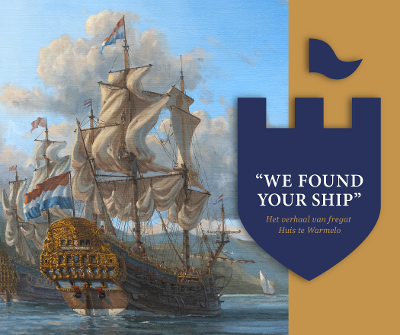
“We found your ship”
address Kasteel Radboud, Oudevaartsgat 8, Medemblik
The story of the frigate Huis te Warmelo. Dive with us to a depth of 60 metres, where the wreck of a Medemblik frigate rests on the seabed. Naval batt...
Tuesday 6 October 2026
Radboud, tussen zwaard en ziel
address Kasteel Radboud, Oudevaartsgat 8, Medemblik
For anyone wondering why Radboud Castle is called that, this exhibition provides the answer. Not only that, 'Radboud' takes you to rich and powerful F...
Tuesday 6 October 2026

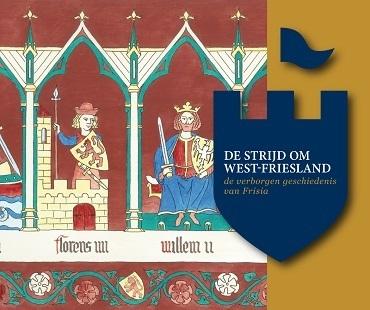
De Strijd om West-Friesland
address Kasteel Radboud, Oudevaartsgat 8, Medemblik
Why is Radboud Castle in Medemblik? And what does the Frisian empire have to do with it? The ancient Frisians were the Vikings of the Low Countries. T...
Tuesday 6 October 2026
Sjors van der Panne – van Boeijen tot Brel
address BON-Theater, Admiraliteitsweg 6a, Medemblik
A musical journey through the most beautiful Dutch and French chansons
Saturday 10 October 2026

Onder stoom in Herfstvakantie
address Nederlands Stoommachinemuseum, Oosterdijk 4, Medemblik
From Saturday 10 to Sunday 25 October, the fire in the boiler will be stoked daily (except Monday) at the Stoommachinemuseum, located in the former st...
Saturday 10 October 2026

Boekenmarkt Popkoor Cantabile
address Cultura, Kleingouw 112, Andijk
Book market at Cultura Andijk from 12:00 to 15:00. See also the puzzles, CDs, and LPs. You can also win great prizes in the lottery. You are most welc...
Saturday 10 October 2026

Antiek & Curiosamarkt Bonifaciuskerk Medemblik
address Bonifaciuskerk Medemblik, Kerkplein 9, Medemblik
In the Bonifaciuskerk in Medemblik, there will be another large Antiek Brocante & Curiosamarkt on Saturday 10 October and Sunday 11 October with many ...
Saturday 10 October 2026

DE MEIDEN van toen – NAAR DE GETVER
address Theaterkerk Wadway, Wadway 30, Spanbroek
The creative trio Kim Perfors, Catherine Sorgdrager, and Mariska Pronk met on stage and quickly became friends. They create cabaret about womanhood in...
Saturday 10 October 2026

Gouden Nacht 2026
address Meelmolen De Herder, Westerdijk 3, Medemblik
The theme “celebrate difference” forms the core of Golden Night 2026. It will be an evening full of music, theater, stories, and unexpected encoun...
Saturday 10 October 2026

Harry Sacksioni – Love of My Life
address Theaterkerk Hemels Twisk, Dorpsweg 121, Twisk
Harry Sacksioni dedicates the title of his new album, 'Love of My Life,' to his greatest love: his guitar. Besides playing it virtuously, he adores it...
Saturday 10 October 2026

Verlaine Ensemble – Verlaine et ses amis
address Huis Midwoud, Midwouder Dorpsstraat 17, Midwoud
Verlaine et ses amis is a poetic-musical performance centered on Paul Verlaine (1844-1896). Four passionate women take you on a journey through the li...
Sunday 11 October 2026

Barricade door Dorfmann & Bos
address Cultura , Kleingouw 112, Andijk
On Sunday afternoon, October 11, you can witness a special performance. A musical quest for freedom.
Sunday 11 October 2026

